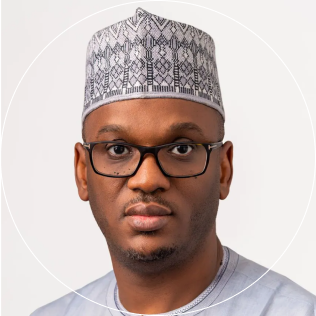

CHAIRMAN STATEMENT
Distinguished Shareholders, my colleagues on the Board, invited Guests and Gentlemen of the press; you are welcome to the 44th Annual General Meeting of our Company.
Dear Shareholders, I hereby present to you an overview of the emerging issues in the global and domestic economy in 2023 as well as a summary of the activities and performance of our insurance Company for the period 2021 to 2023.
THE GLOBAL ECONOMY.
The global economy in 2023 experienced a significant slowdown, marked by weak growth, persistent inflation, and tightening monetary policy in major economies, creating a “perilous” situation with a projected moderate recovery expected in 2024; key concerns include the ongoing war in Ukraine, rising interest rates, and potential banking sector stress impacting credit availability.
The following were the key points about the 2023 global economy:
Slowdown in growth: Most analysts predict a substantial drop in global GDP growth compared to previous years, with the World Bank projecting a 2.1% expansion in 2023.
Inflation pressures: Despite some easing, inflation remains a significant concern in many regions, prompting central banks to continue raising interest rates which can further dampen economic activity.
Geopolitical tensions: The ongoing war in Ukraine was a major factor that impacted energy prices and global supply chains, exacerbated economic uncertainties.
Uneven impact: While developed economies experienced a slowdown, emerging markets got more hit due to tighter global financial conditions and potential capital outflows.
POTENTIAL BRIGHT SPOTS:
Resilient China and India: There was a continued strong growth in major economies like China and India, which partially offset the global slowdown.
In 2023, the United States and the European Union (EU) had a record year of trade and investment. The two regions were major economic partners and have the world’s most integrated economic relationship.
On Trade relationship, the EU and US traded €1.6 trillion in goods and services in 2023, the largest trading partner for goods exports, and the second largest for imports, had a trade surplus of €157 billion in goods with the US in 2023 and are also major investment partners, with €5.3 trillion invested in each other’s markets.
On Economic impact, EU and US together represent almost 30% of global trade in goods and services, and 43% of global GDP. US exports of goods and services to the EU support 2.3 million jobs in the US and EU firms’ investments in the US employ 3.4million people.
On Cooperation, In March 2023, the first EU Innovation Agora took place in Silicon Valley, and both held a summit in Washington on October 20, 2023.
THE DOMESTIC ECONOMY
In 2023, Nigeria’s economy grew by 2.9%, which was slower than 2022’s 3.3% growth. This was due to inflation, a struggling oil sector, and a global economic slowdown.
Nigeria’s Gross Domestic Product (GDP) grew by 3.46% (year-on-year) in real terms in the fourth quarter of 2023. This growth rate is lower than the 3.52% recorded in the fourth quarter of 2022 and higher than the third quarter of 2023 growth of 2.54%. The performance of the GDP in the fourth quarter of 2023 was driven mainly by the Services sector, which recorded a growth of 3.98% and contributed 56.55% to the aggregate GDP. The agriculture sector grew by 2.10%, from the growth of 2.05% recorded in the fourth quarter of 2022. The growth of the industry sector was 3.86%, an improvement from -0.94% recorded in the fourth quarter of 2022. In terms of share of the GDP, industry, and the services sectors contributed more to the aggregate GDP in the fourth quarter of 2023 compared to the fourth quarter of 2022. On an annual basis, GDP grew by 2.74% in 2023 relative to 3.10% in 2022.
Key economic indicators include the following:
- Inflation: Increased from 18.8% in 2022 to 24.5% in 2023
- Fuel prices: Petrol prices increased 167% from May to December 2023
- Oil sector: The oil sector has been innrecession since 2020
- Non-oil sector: The non-oil sector, including agriculture, services, and industry, contributed to economic growth.
Economic challenges: Social challenges: Insecurity, including banditry, kidnappings, insurgency, and separatism.
Financing costs: Nigeria faces high financing costs in global financial markets.
Government response: The government has implemented reforms to avoid a fiscal cliff, including ending the gasoline subsidy and shifting to a market- reflective foreign exchange rate.
The government has also introduced targeted cash transfers to cushion the impact of increased gasoline prices.
THE INSURANCE INDUSTRY
In 2023, Nigeria’s insurance industry experienced growth in assets and premium income. However, the industry still has low penetration compared to other African countries.
Nigeria’s insurance industry has sustained its progressive trend of positive market performance at the close of 2023, recording a milestone growth to close at ₦1.003 trillion at the end of fourth quarter, representing about 27 per cent growth compared to the ₦790 billion recorded in 2022. The non-life business accounted for 61.3 per cent of all premiums written during the year, amounting to ₦615.1 billion, while the Life segment contributed 38.7 per cent, valued at ₦388.1 billion.
The market also recorded a retention of about 87.7 per cent for the Life business, just about 54 per cent for non-life while the aggregate market average retention stood at 66.7 per cent during the same period. Major growth drivers in the non-life segment of the market were Oil & Gas and Fire Insurances, contributing 27.3 percent and 24.1 percent, equal to ₦167.8 billion and ₦148.1 billion respectively.
In a direct reflection to the “no-premium no-cover” policy of the Commission, the outstanding premium continue to decline, posting a 1.6 per cent as outstanding of all the premiums generated in the market during the period. Statistics also shows that the market recorded total assets of about ₦2.67 trillion and capitalization of ₦851 billion in 2023.
Developments in the industry
- A mandate to operators to transit to the International Financial Reporting Standards (IFRS17) in the preparation and presenting their financial statements.
- The National Insurance Commission ( NAICOM or The Commission) in late December 2022 announced 200 percent increase in third party motor insurance from ₦5000 to ₦15000, which took effect from January 1, 2023. This came after over 20 years of non-increase in the compulsory Motor Third Party insurance policy creating an increase revenue base for the operators.
- The Commission released guidelines for regulatory sound box and Takaful operations. The move was part of the commission’s strategic objectives to drive innovation of products and services and ensure that operators were professional in the conduct of their businesses in line with best practices. The regulation, which became effective on May 1, 2023, seeks to set standards for live trials or demonstrations of newninnovative products in the industry.
- The Commission hosted a national insurance conference on implementation of compulsory builders insurance during which it launched the insurance sector 10 year strategic road map and guidance note for the insurance of government assets and liabilities.
Challenges:
Despite these achievements, stakeholders in the sector proffer that there are still a good number of factors working against optimum realisation of operators’ dream of achieving mass patronage. Some of these, the stakeholders opine, are hostile economy, trust issues emanating from hidden clauses in insurance policy documents, inadequate access to information, technology issues, weak regulatory framework as well as lack of skilled personnel as top among the militating factors. They also highlighted lack of awareness on the value of insurance as a key factor.
THE NEW BOARD OF DIRECTORS AND MANAGEMENT.
- In July 2022 Norrenberger Advisory Partners Limited, an industry-leading, integrated financial services group that provides a comprehensive range of financial solutions to individuals and institutions, took over the operations of the company after it obtained the approval of the National Insurance Commission (NAICOM). Norrenberger acquired the shares of the Company, hence making it a new dawn in the history of International Energy Insurance Plc.
- The new investor got the approval of the Commission to take over the organization from the NAICOM Interim Board, who ran the affairs of the organization for over 8 years, with a view to reposition it. The new Board was appointed and approved by NAICOM thereafter and a new management led by the Managing Director was approved on 18th January 2023.
- The supporting management team got the regulatory approval for their appointments in January 2024, hence, the birth of a new Board and Management. Whilst our Company go through with these approvals, we also started various damage controls and reorganization of the Company since the organization had virtually been in comatose for over 10years (before Norrenberger took over).
- We have made good all outstanding Naira denominated claims of over ₦5 million and have paid virtually all outstanding taxes, directors’ fees, unpaid dues and made good accumulated unpaid pension liabilities of over ₦300 million as well as sorted all unpaid staff salaries for more than 2 years. At the moment, we have paid over 92.6% of US Dollar denominated unpaid claims to the tune of USD 533,000, including outstanding NNPC Legacy claims and remains but a little which have been scheduled for payment
- Reconstruction of the balance sheet management had sought the approval of the Board of Directors at its 86th Board meeting, to wind down certain investments in real estate to enhance liquidity, solvency, and business operating performance. On the short term the above submission by Management will correct ₦1.0 billion solvency shortfall and ₦5.3 billion on the medium term.
- Re-negotiating the Daewoo loan liability the Daewoo loan is a foreign denominated term loan that predates the core investors which due to the free fall of the Naira has had a detrimental impact on the books of the Company and the value of the shareholders’ funds of the business. Due to the size of the loan, it is very sensitive to exchange rate volatility for which the business does now have a corresponding foreign currency asset to hedge the impact. The Core investors and Management are currently taking steps at engaging the lender of the funds to renegotiate the loa to terms more favourable for the organization
FINANCIAL PERFORMANCE
Despite the challenges in the operating environment, the Board was determined to post a good performance. The Company recorded a growth in gross premium at an average rate of 40.9% with yearly growth rate of 17.8% in 2021, 22.1% in 2022 and 82.8% in 2023, translating to ₦687 million, ₦881.5 million and ₦5.1 billion respectively.
This landmark performance is as a result of Board and Management synergy to reposition the on the part of growth and make sure it is profitable to the shareholders.
During the period the Company expressed determination to meet its to policy holders through claims settlements. Claims expenses increased to ₦232.4 million in 2021 from ₦69.5 million in 2020 translating to 70% increase due to issues on the legacy claims. However, due to our resolve to continue settling the legacy outstanding claims, it further increased by29.8% to ₦740.9 million in 2023. Profit before tax was at 84% or ₦931 million in 2023 from negative ₦146 million in 2022 due to better underwriting measures and various cost controls put in place by the Board.
The Board has also started discussing with Daewoo Securities on a better way of offsetting the liabilities which has been a hindrance to the company’s growth for decades. I appeal to the Shareholders to support the steps being taken by the core investor and Board toward amicable resolution of the debt for the company to have a new life.
OTHER ACHIEVEMENTS OF THE BOARD.
- Implementing policies and procedures toward establishing good governance and industry best practices.
- Strategic recruitment and engagement towards refocusing the Company and direct it on the path to growth.
- Settlement of all legacies liabilities including Taxes and other fees
- Embarking on strategic cost optimization
- Strengthening the Internal Controls.
- Payment of claims less than 200,000.00 within 24 hours in other to improve our customer satisfaction.
- Improve our brand visibility through advertising, brokers sponsorship and stakeholders engagement.
FUTURE OUTLOOK
The World Bank forecasts Nigeria’s economy will grow by 3.5 per cent in 2025 and 3.7 per cent in 2026, up from an estimated 3.3 per cent in 2024.
The Central Bank of Nigeria (CBN) predicts a slightly higher Gross Domestic Product (GDP) growth of 4.17 per cent. This growth is expected to boost production, job creation, and help reduce inflation by increasing the supply of goods and services. Compared to other African nations, Nigeria’s growth remains strong, with Egypt projected at four per cent and South Africa at 1.7 per cent. Globally, the economy is expected to grow by 2.8 per cent in 2025, putting Nigeria in an optimistic position.
To the insurance industry, 2025 is a year of uninterruptible recapitalisation and renewed legislation that will dismantle every stronghold that has held the sector hostage against its growth and developmental dreams.
Their optimism in the new year is no doubt anchored on the passage, late in 2024, of the Nigerian insurance Industry Reform bill by the upper legislative house and perhaps huge amount of ₦4 trillion allocation to infrastructural development by federal government in the 2025 appropriation bill which the presidency presented to the joint session of the National Assembly.
The industry remains optimistic that if the budget is passed into enabling Act, some portions of the infrastructural fund would hit the vaults through insurances of those projects.
With the settlement of Daewoo liability at sight, the Company will have a fresh air to breathe as we will be able to write Oil and Gas business which is one of the largest shares of the industry premium income. Also we will leverage on Enterprise Risk Management (ERM) in our operations to close gaps and enhance our risk management strategies, the risk appetite of the Company on all areas has been set in this regard.
We will be disciplined on execution and ensure our Company becomes the brand of choice in the Nigerian Insurance Industry. The business model will be professionally driven by a structure that analyses its strengths, weaknesses, opportunities and threats for appropriate responses.
The Board is unrelenting and is committed to repositioning the company for market leadership which shall directly relates to a benchmark global best practice.
APPRECIATION
Distinguished shareholders, ladies and gentlemen, our profound gratitude goes to our customers who have stood by the Company all through the trying moments and those seeing values in what we are currently offering. Our gratitude also goes to our staff for their unalloyed commitment to our great organisation.
I am confident that our strong foundation, combined with our forward- looking strategy, positions us for the continued success in the years to come. We remain steadfast in our commitment to creating a long-term value for all our stakeholders.
Finally, on behalf of the Board, I would again like to thank all of our amazing people and teams across the business for all of their commitment and hard work during the year.
I appreciate you and may God bless you all.
Alhaji Bukar Goni Aji OON, CFR
Chairman Board of Directors